
Silver (Ag)
Atomic number: 47
Period/Group:
5 / 11 (coinage metals: Cu–Ag–Au)
Standard atomic weight:
107.8682 u
Electron configuration:
[Kr] 4d¹⁰ 5s¹
Shells:
2, 8, 18, 18, 1
Density (20 °C):
10.49 g/cm³
Melting / Boiling:
961.78 °C / 2162 °C
Electronegativity
1.93
Magnetism: Diamagnetic
Gold (Au)
Atomic number: 79
Period/Group:
6 / 11 (coinage metals: Cu–Ag–Au)
Standard atomic weight:
196.96657 u
Electron configuration:
[Xe] 4f¹⁴ 5d¹⁰ 6s¹
Shells:
2, 8, 18, 32, 18, 1
Density (20 °C):
19.32 g/cm³
Melting / Boiling:
1064.18 °C / 2856 °C
Electronegativity
2.54
Magnetism: Diamagnetic
Sulfur (S)
Atomic number: 16
Period/Group:
3 / 16 (chalcogens: O–S–Se–Te–Po)
Standard atomic weight:
32.06 u
Electron configuration:
[Ne] 3s² 3p⁴
Shells:
2, 8, 6
Density (20 °C):
~2.07 g/cm³
Melting / Boiling:
115.21 °C / 444.6 °C
Electronegativity
2.58
Magnetism: Diamagnetic
Lithium (Li)
Atomic number: 3
Period/Group:
2 / 1 (alkali metal)
Standard atomic weight:
6.94 u
Electron configuration:
[He] 2s¹
Shells:
2, 1
Density (20 °C):
0.534 g/cm³ / lightest metal/solid element
Melting / Boiling:
180.50 °C / 1342 °C
Electronegativity
0.98
Magnetism: Weak paramagnet
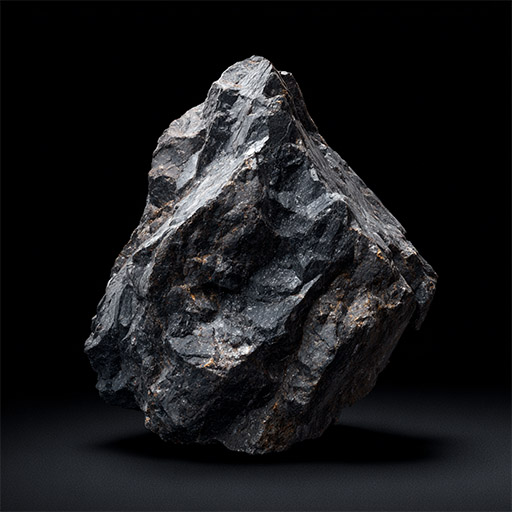
Natural Source
Close-up of a dull, silvery-gray lump of lithium on a dark lab surface, its skin lightly oxidized.
Soft, knife-marked edges; tiny beads of mineral oil glint to limit tarnish.
A gloved hand and tweezers frame the sample, hinting at its light weight and reactivity.
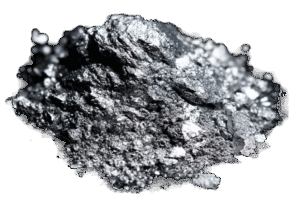
The Shining Conductor
Thermal Diffusivity

Electrical Conductivity

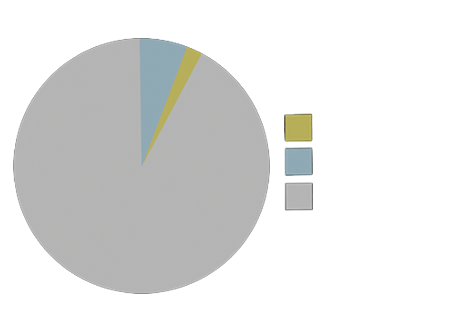
Global deposits
Electron Cloud – Estimated Possible Positions
Electrons do not orbit the nucleus on fixed paths. Instead, they form a diffuse cloud showing where each electron is most likely to be found — brighter regions mean higher probability
Crystallization of Sulfur
When molten sulfur cools, it solidifies into yellow crystals that can form in rhombic or monoclinic structures depending on the temperature.

Electron Excitation in Sulfur
Sulfur burns blue because its excited electrons release energy as blue light when they fall back to their normal state.
Lithium Crystals
At room temperature, lithium crystallizes in a body-centered cubic (bcc) lattice;
at cryogenic temperatures it transforms to a close-packed rhombohedral (9R) variant.
Its lightness comes from very low atomic mass (6.94 u) and the relatively open bcc packing, giving a density of ~0.534 g/cm³—the lightest metal.
This soft, low-density lattice makes Li ductile but easily deformed (low hardness/creep), so engineers often use Li in alloys or with protective coatings.